
Geary County Criminal Court Records
Criminal court records in Geary County are kept by the Clerk of the District Court after a state criminal case is filed in Geary County District Court. The case file is the court side of the matter. It can include the complaint or information, charge entries, probable-cause material when public, arraignment events, bond orders, motions, trial settings, orders, plea entries, disposition, fines, costs, probation, restitution, and sentencing orders.
Kansas district courts are trial courts of general jurisdiction. In Geary County, that means the district court hears felony and misdemeanor criminal cases, along with civil, domestic, probate, juvenile, small claims, traffic, fish and game, and other matters. City ordinance and some municipal traffic cases may start in Junction City Municipal Court or Grandview Plaza Municipal Court, but district criminal case records are maintained through the state district court system.
The Geary County Attorney Criminal Division handles state criminal prosecutions filed in district court. The Geary County District Court then maintains the court file through the Clerk of the District Court. For a closer look at the first charge entries after arrest, see the local arrest records and court charges topic.
The Geary County Attorney page identifies Krista Blaisdell as County Attorney and lists the office at 801 N Washington, Suite A, Junction City, KS 66441. That office prosecutes, but it is not the court-record custodian. Certified court copies and court file questions go to the district court clerk.
The Kansas statute article at the Kansas Legislature site is useful when reading criminal court records that involve expungement. Expungement affects public access, so the visible court record may not show every historic event.
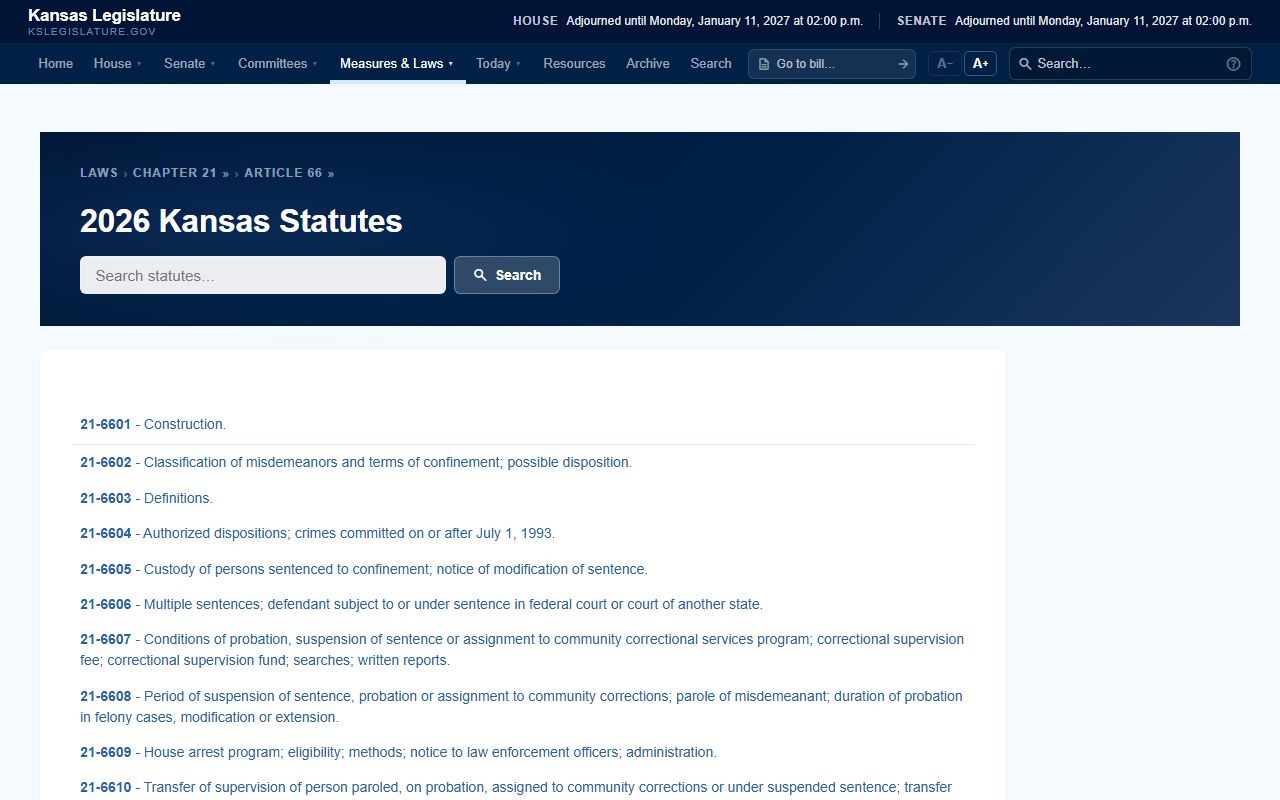
That statute source connects the public case file to Kansas rules on when certain convictions, arrest records, or diversion agreements may be restricted from ordinary public view.
Find Geary County Criminal Cases
The 8th Judicial District directs record search users to Kansas Judicial Branch CaseSearch. CaseSearch is the statewide public search point for district court case information and documents when the record is available online. Kansas courts also explain public district court records and courthouse terminal access through the District Court Records page.
- Open Kansas Judicial Branch CaseSearch and choose the search path that fits the information you have.
- Search by defendant name or case number. Geary criminal docket examples in local jail records include CR case numbers.
- Open the case result and check the court, party names, docket entries, charge descriptions, hearing dates, and disposition fields.
- Use the 8th Judicial District record-search page or courthouse access if a document is not available in the public portal.
- Request copies from the Clerk of the District Court when a plain or certified copy is needed for filing, employment review, licensing, or counsel.
If the online result is thin, the fallback is still local. The 8th Judicial District Record Search page points users toward the state case search system, while the local clerk at 138 E 8th Street can address court copy requests. Kansas also provides a Request Court Records page for court-record requests under the Kansas Open Records Act.
Geary County Criminal Case Flow
A criminal court record grows as the case moves through the district court. The charge may begin as a complaint or information, then the case proceeds to arraignment, pretrial settings, motions, plea negotiations, trial if needed, disposition, and sentencing. Each event can create a docket entry or filed document.
Case flow: Charges Filed › Arraignment › Pretrial and Motions › Plea or Trial › Disposition › Sentencing
| Stage | What the Geary County Record May Show |
|---|---|
| Charges Filed | Complaint or information, charge description, statute or offense, crime class, offense date, and case number. |
| Arraignment | Hearing date, rights advisement, plea entry, counsel information, bond issues, and next setting. |
| Pretrial and Motions | Motions, orders, continuances, discovery issues when public, and trial or plea settings. |
| Plea or Trial | Guilty, not guilty, no contest, verdict, amended charges, dismissed counts, or acquittal details. |
| Sentencing | Sentence length, probation, restitution, fines, costs, jail credit, and post-judgment orders. |
The County Attorney's criminal division states that the office has full-time criminal prosecutors. Their filings help start the court record, but the judge's orders and the clerk's docket entries show how the filed charges changed over time.
The County Attorney Criminal Division source helps identify the prosecution role in Geary County criminal court records.
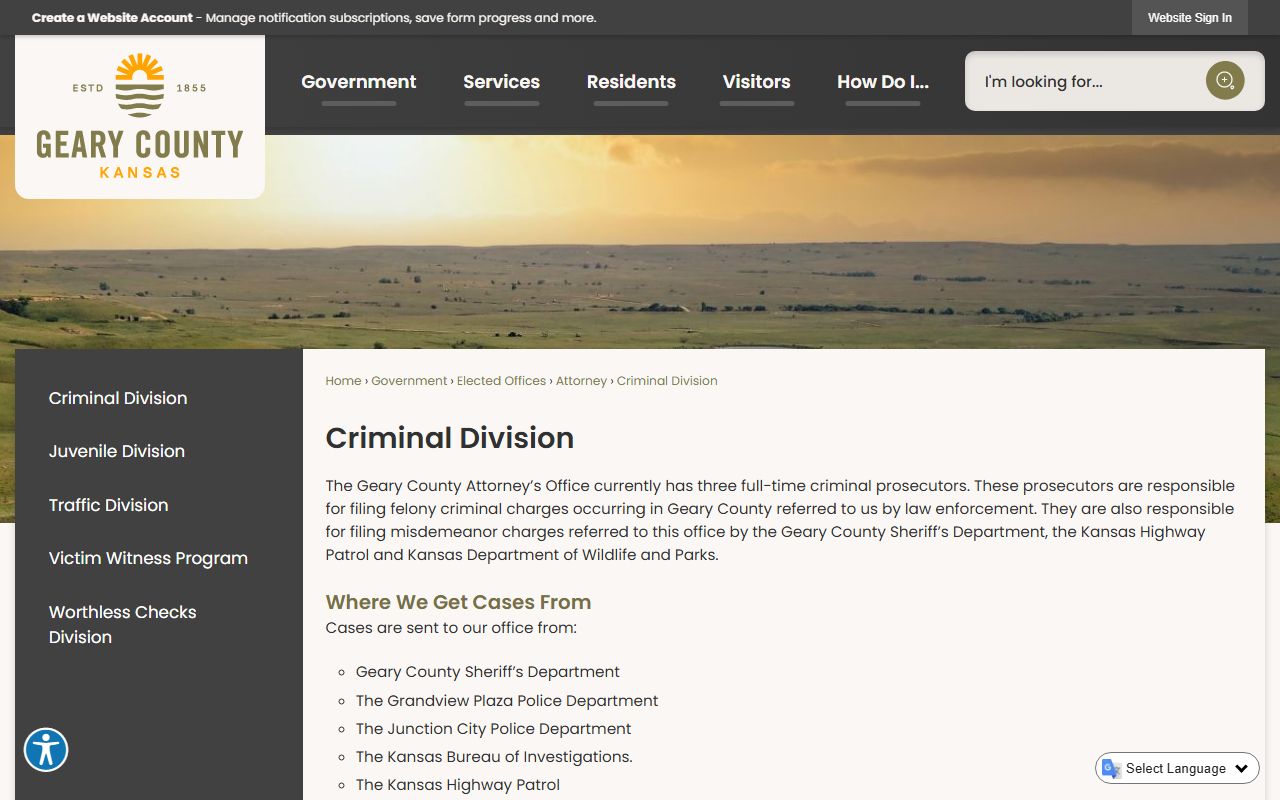
That office information belongs with prosecution facts, while the court case file remains with Geary County District Court and the clerk.
What Geary Criminal Records Show
Geary County criminal court records can be read field by field. The docket number identifies the case. Party fields commonly show the State of Kansas and the defendant. Criminal-specific entries can show the charge description, offense date, crime class, attempt or commit status, bond type and amount, plea, disposition, disposition date, sentence length, probation, restitution, fines, and costs.
| Field | What It Shows |
|---|---|
| Case Number | The district court identifier used to track the criminal case and all filings. |
| Defendant | The person accused in the case, with party role and counsel when listed. |
| Charges | The filed offense descriptions, statutes, crime class, offense date, and any amended counts. |
| Docket Entries | The chronological list of hearings, filings, orders, continuances, and court actions. |
| Plea | The defendant's formal response, such as guilty, not guilty, or no contest. |
| Disposition | The result of a charge or case, including conviction, dismissal, acquittal, or other final action. |
| Sentence | Jail or prison term, probation, fines, costs, restitution, and related sentencing orders. |
Local jail records can also show charge lines that later connect to district court. The inmate sample in the research included court date, court room, docket number, charge description, disposition, disposition date, sentence length, crime class, arresting agency, attempt or commit status, and bond. Those fields are useful leads, but the court file controls the final court outcome.
Geary Charges vs Convictions
A charge is an accusation filed or listed during the criminal process. A conviction is a final legal result based on a guilty plea, no-contest plea accepted by the court, or guilty verdict. Geary County criminal court records can show charges that were amended, dismissed, reduced, or resolved differently by count.
| Point | Charge | Conviction |
|---|---|---|
| Meaning | An allegation that a law was violated. | A final finding or plea that establishes guilt. |
| Timing | Appears early and may change. | Appears after plea, verdict, or final disposition. |
| Record Risk | May remain visible even if later dismissed unless restricted. | May trigger sentence, probation, costs, and collateral effects. |
The sheriff's inmate material warns that people are innocent until proven guilty and that listed charges may be amended in court. That warning matters when using jail charge data beside district criminal court records.
Reading Geary County Sentences
Disposition means the result of a charge or case. In a Geary County criminal court record, one count may show guilty while another is dismissed. A dismissed charge is not the same as a conviction. A sentence entry may list confinement, probation, restitution, fines, costs, or other court-ordered terms after conviction.
Common terms need plain reading. Arraignment is the first criminal hearing where charges, rights, and plea are addressed. A motion is a written request asking the judge to act. Bond is a release condition or security while the case is pending. Probation is supervised release instead of, or after, confinement. Restitution is money ordered to repay a victim.
Note: A criminal case may contain several counts, so read each charge line and disposition separately.
Restricted Geary Criminal Records
Some Geary County criminal court records are not available through public CaseSearch or courthouse terminals. Kansas Supreme Court Rule 22 identifies limits on public electronic access. KORA also permits nondisclosure of certain records and supports separating open from closed information when practical.
| Point | Sealed | Expunged |
|---|---|---|
| Public View | Closed from ordinary public access by law or court order. | Public access is limited after the court grants eligible relief. |
| Examples | Sealed cases, protected identifiers, some warrants, or sensitive filings. | Certain convictions, arrest records, diversion agreements, or juvenile adjudications. |
| Kansas Source | Kansas Supreme Court Rule 22 and KORA limits. | K.S.A. 21-6614 and court self-help guidance. |
The Kansas courts self-help material explains record expungement for eligible cases. For Geary County district criminal cases, the petition is filed in the court tied to the record, and the research lists the district court expungement filing fee at $195.
The Kansas record expungement self-help source gives the state court path for eligible arrest, conviction, diversion, and juvenile adjudication records.
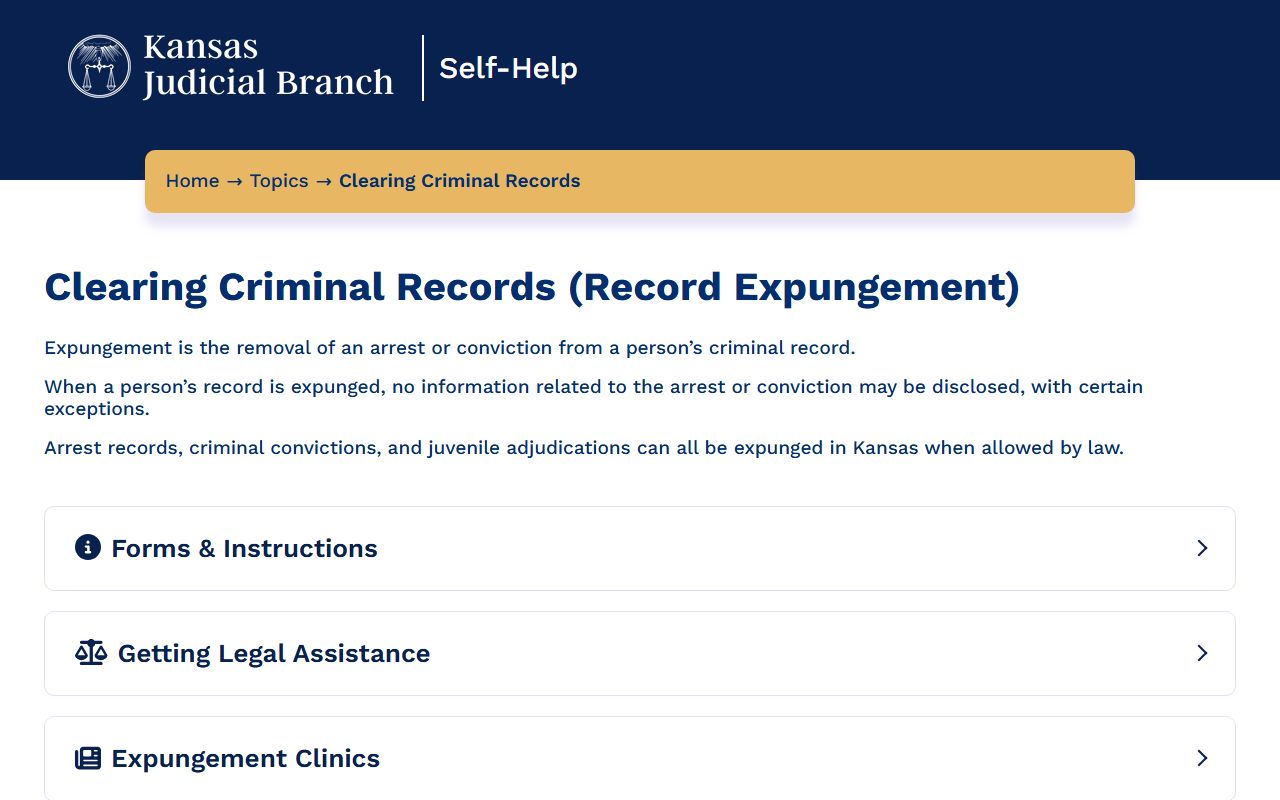
The self-help source is not a public search portal. It explains the court process that can change whether a criminal record remains visible.
Geary Criminal Court Public Access
Public access to Geary County criminal court records begins with the right custodian. District court case files are searched through CaseSearch or courthouse terminals. Copies and court record requests go through the Clerk of the District Court. Sheriff's reports, jail records, and accident reports use the sheriff's records channel, not the court clerk.
Key Kansas access rules:
K.S.A. 45-215 identifies the Kansas Open Records Act. K.S.A. 45-218 governs inspection and agency response duties. K.S.A. 45-219 covers copies and fees. K.S.A. 45-221 lists exempt records and supports redaction of closed information.
Juvenile matters require special care. K.S.A. 38-2309 governs juvenile court records and disclosure. Adoption, mental health, care and treatment, confidential addresses, protected identifiers, victim details, and sealed filings are not treated like ordinary criminal case records.
The K.S.A. 22-2410 arrest-record expungement source is relevant when a case search is affected by an arrest expungement.
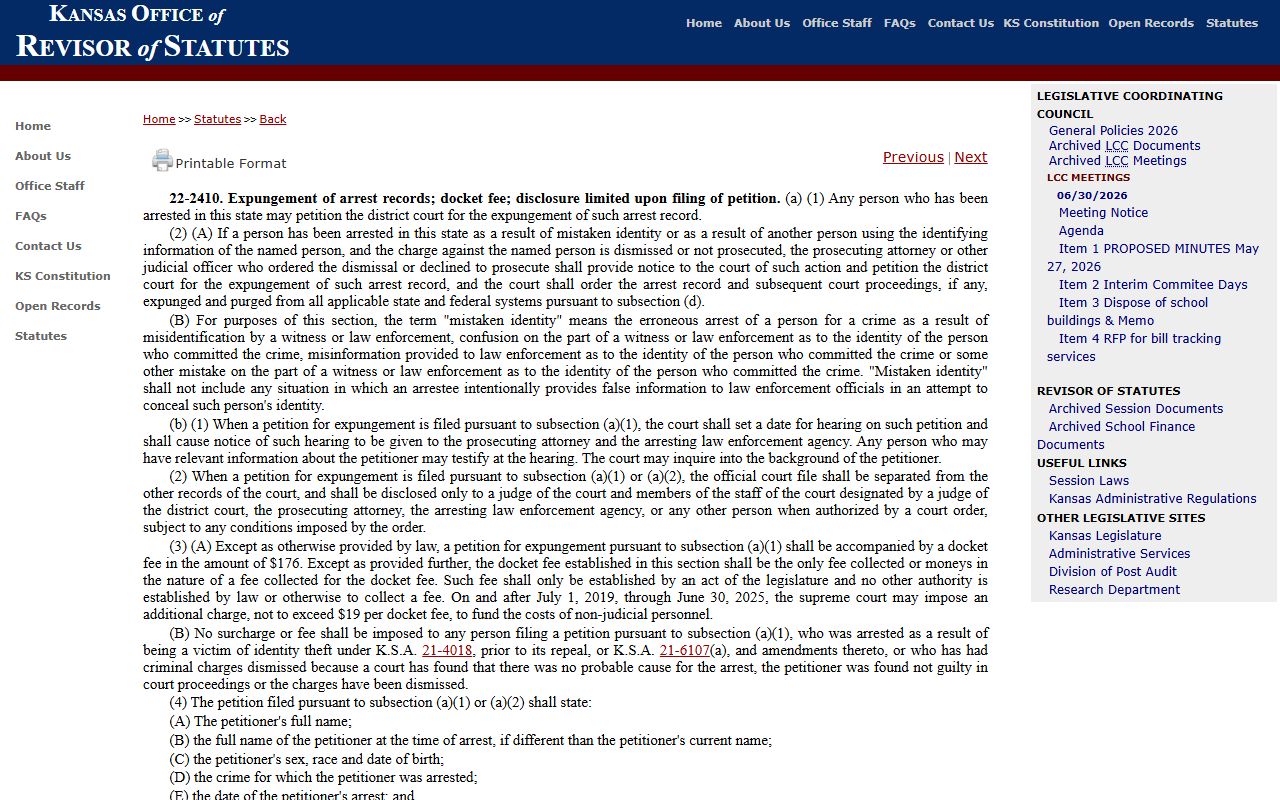
That arrest-record statute helps explain why some criminal-history or booking-related details may not appear in an ordinary public lookup.
Geary Background Check Limits
A casual court lookup is not the same as a regulated background check. CaseSearch and clerk records can help confirm a case number, charge, hearing, or disposition, but they do not replace a full Kansas criminal-history process or an FCRA-compliant consumer report when a law requires one.
Important: Court records should be verified with the originating court before use for legal, licensing, housing, or employment decisions.
Kansas criminal-history searches may use state systems outside the district court file. The court record remains the best source for filed case events and judicial outcomes, while state criminal-history tools may be used for broader identity-based history checks under their own access terms.
The K.S.A. 21-6614 expungement statute source shows why public access can differ from a complete agency history.
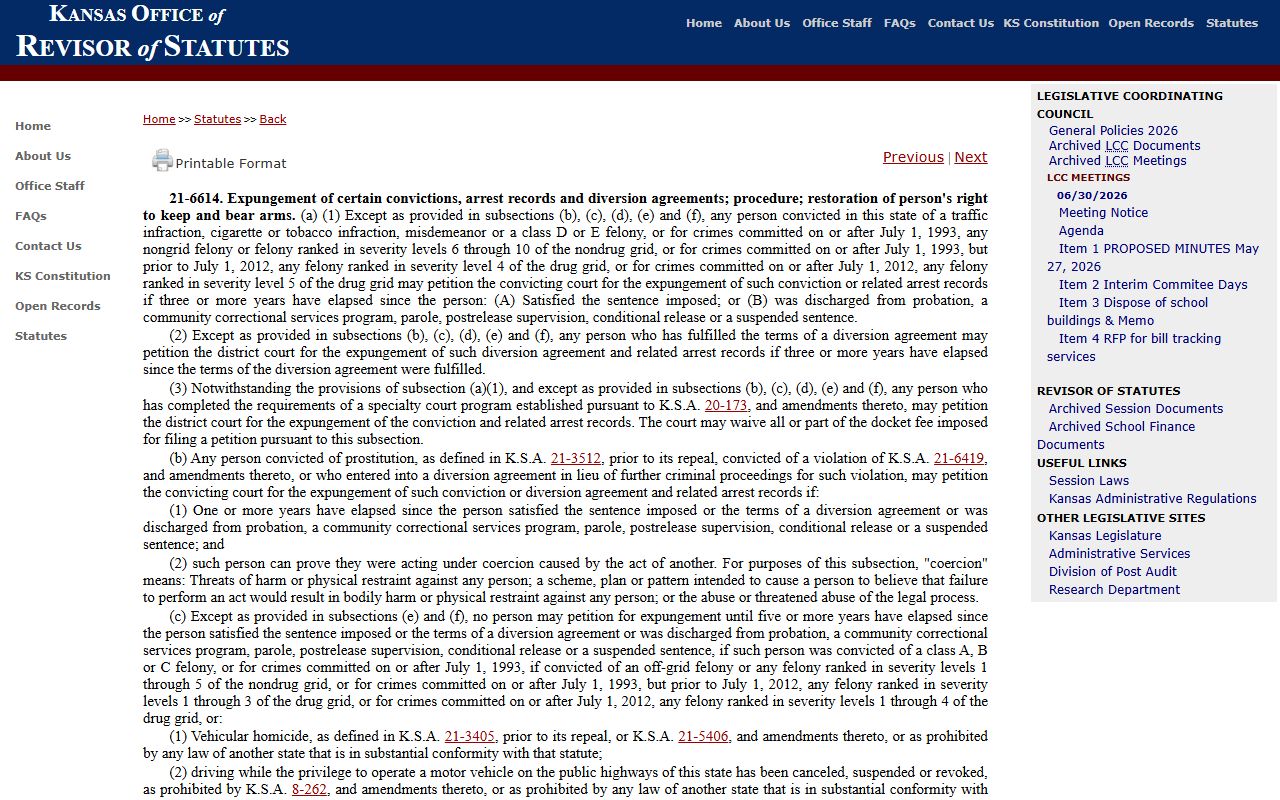
Expungement rules are part of the reason a visible court search should be checked against the court, the clerk, or the proper state agency.
Geary County Criminal Copy Requests
The Clerk of the District Court is the practical record custodian for Geary County District Court criminal case files. The local court address is 138 E 8th Street, Junction City, KS 66441, and the district court phone is 785-762-5221. The research lists a clerk extension of 1431 for the Clerk of the District Court.
For copies, give the clerk the case number if known, the defendant name, an approximate filing or offense date, and the kind of copy needed. Ask whether the requested document is available online, must be reviewed at a courthouse terminal, or requires a formal records request. If the matter began as a municipal ordinance case, contact the city court first because municipal records are separate from district court records.
The Geary County Attorney source identifies the local prosecutor for state criminal cases.
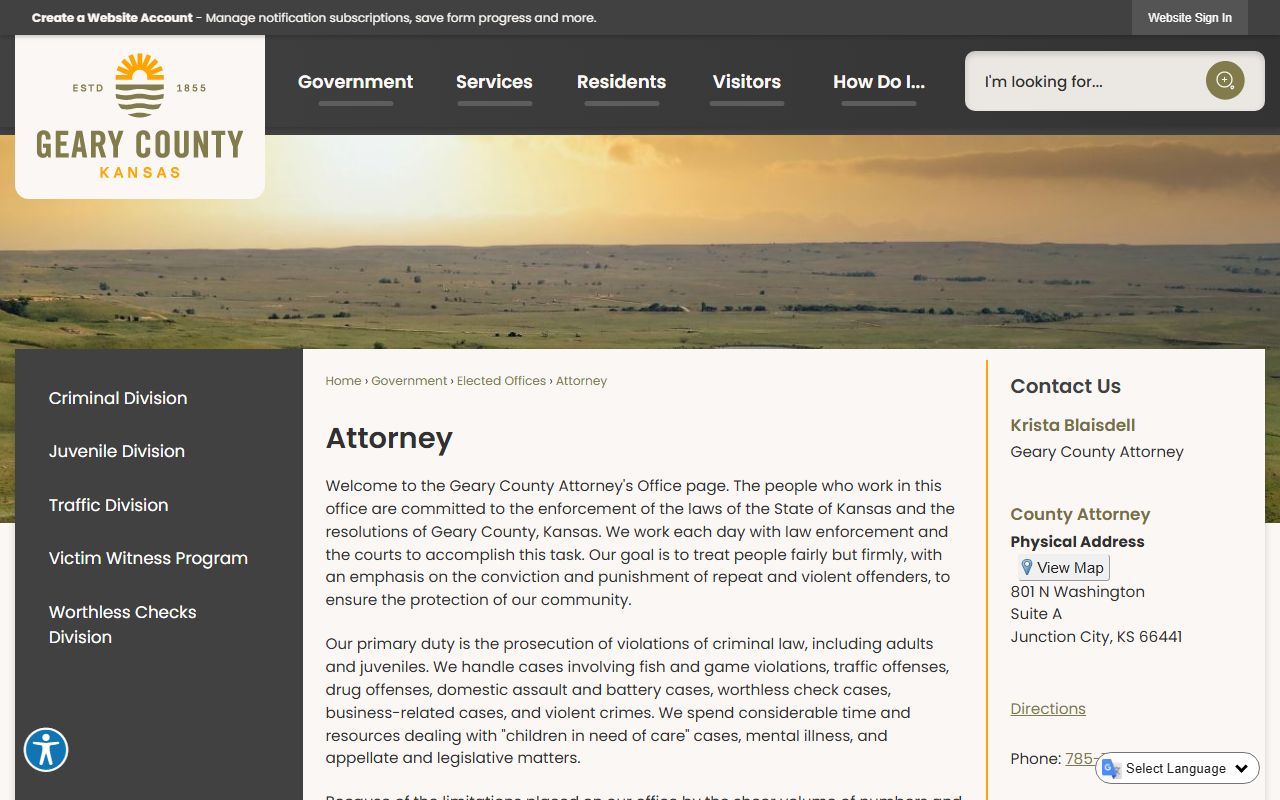
That office may explain prosecution contacts, but filed criminal court records and certified copies remain a district court clerk function.